The shipping distance fallacy
Specify European furniture for a Singapore office and someone will ask about the carbon footprint. Fair question. A chair travels 11,000 kilometres from Valencia. Another chair travels 2,400 kilometres from Guangdong. The closer one wins, right?
Not necessarily. The math is more interesting than that.
The replacement multiplier
Commercial furniture has a dirty secret: most of it gets replaced every 5 to 7 years. Not because styles change. Because cheap furniture breaks. Seams split. Foam collapses. Mechanisms fail. The lifecycle looks like this: buy cheap, replace, buy cheap again, replace again. Four chairs in twenty years. Four manufacturing cycles. Four sets of transport emissions.
Quality furniture works differently. A contract-grade chair built for serious use doesn't break. Foam rated for a decade of daily use keeps its shape. Frames engineered for commercial loads don't flex. One chair. Twenty years.
The lifecycle carbon calculation
Here's the comparison nobody makes:
| Factor | Cheap Chair (4 replacements) | Quality Chair (1 piece) |
|---|---|---|
| Manufacturing emissions | 75kg CO2e × 4 = 300kg | 75kg CO2e × 1 = 75kg |
| Transport (sea freight) | 15kg CO2e × 4 = 60kg | 70kg CO2e × 1 = 70kg |
| **Total 20-year footprint** | **~360kg CO2e** | **~145kg CO2e** |
The European chair with the longer shipping distance produces 60% less lifecycle carbon. Distance matters. Durability matters more.
Why sea freight changes everything
The transport gap isn't as wide as people assume. Sea freight emits roughly 10 to 40 grams of CO2 per tonne-kilometre. Air freight: 500 grams. Most European furniture to Singapore travels by container ship. Most "local" Asian manufacturing still involves significant air freight for samples, rush orders, and replacements.
A single container carries thousands of chairs. The per-unit shipping emissions are fractional compared to manufacturing.
What our brands actually do
Mobliberica. Tables that outlast lease terms
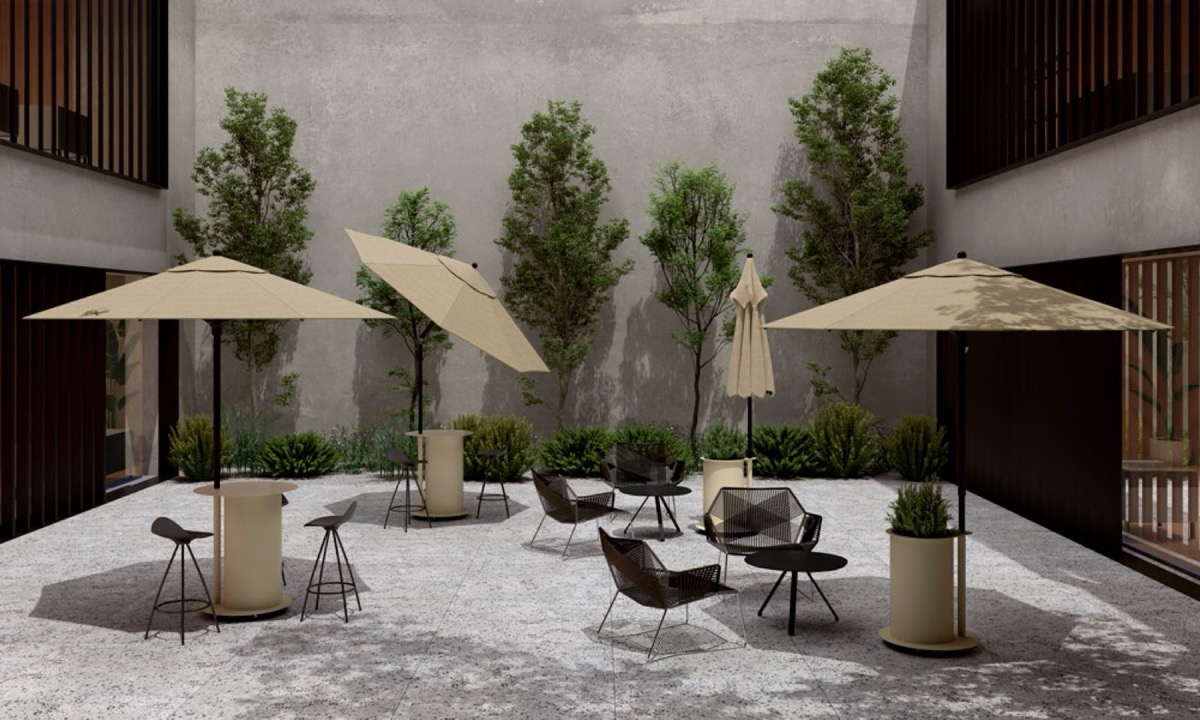
Mobliberica fires every ceramic surface in ecological electric kilns at 1200°C. Their contract-grade tables and chairs are built for continuous commercial use. A ceramic tabletop doesn't need refinishing. No reupholstering. No replacement. The embodied carbon of that firing gets amortised over twenty years instead of five.

Systemtronic. Office accessories since 1988
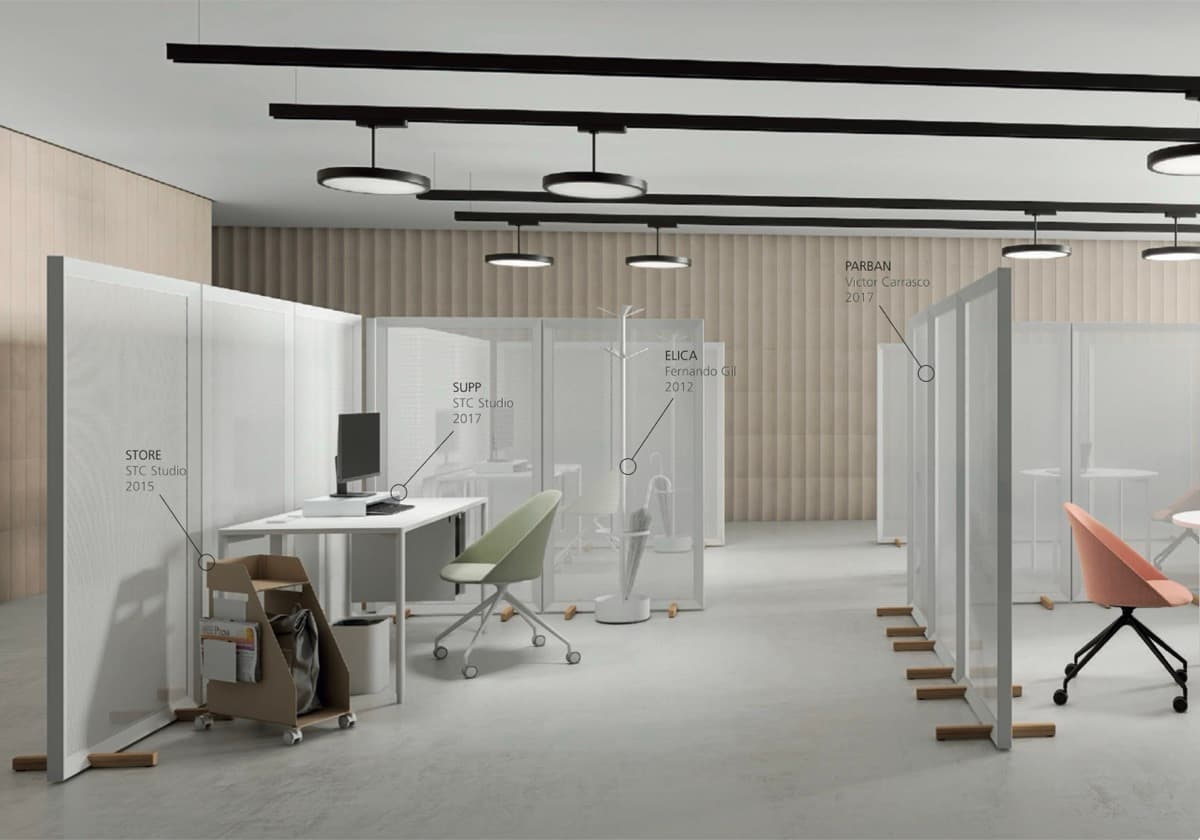
Systemtronic has been making planters, coat racks, room dividers, and office accessories in Valencia since 1988. Their INLIN coat stands and MALVA screens are specified by Google, Apple, and Amazon. Aluminium and steel. Both infinitely recyclable without quality loss. A planter or coat rack from 1995 still looks right in a hotel lobby or office reception today.
Creavalo. Waste as raw material
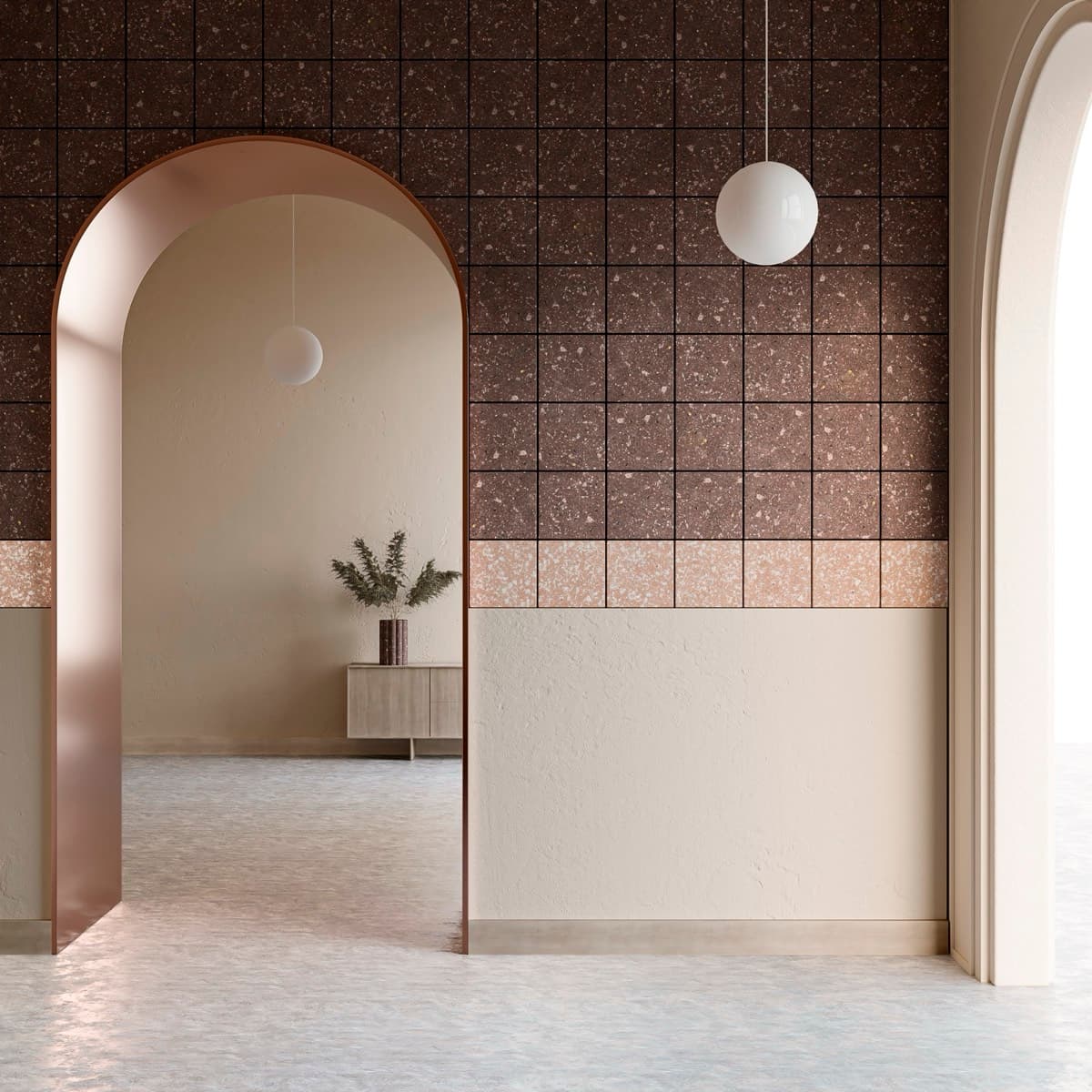
Creavalo makes acoustic art panels from recycled textiles. Every square metre recovers 7.6kg of textile waste from landfill. The Manhattan collection uses 3D sculptural forms. Lienzo reproduces any image onto an acoustic surface. Both deliver Class C absorption (αw 0.60), fire-rated B-s2,d0, and thermal insulation. While looking like commissioned art.
The honest caveat
This isn't an argument that European furniture is always better. A cheap European chair still breaks. The differentiator is quality tier, not geography. The point is simple: when evaluating carbon, look at the full lifecycle. Manufacturing count matters more than shipping distance.
Specifying for longevity
Three questions to ask any furniture supplier:
- 1.What's the fabric rub count rated for? Look for 100,000+ Martindale cycles for contract use. Anything less and you're looking at replacement within 3 to 5 years.
- 2.What's the warranty on frames and mechanisms? 10+ years signals actual confidence in the engineering. Five years or less suggests planned obsolescence.
- 3.Can components be replaced individually? Repairability extends lifecycle. A chair where you can replace the seat cushion, gas lift, or casters is a chair that stays in service instead of hitting landfill.
The brands that answer clearly are building for decades. The ones that hedge are building for replacement cycles.
Getting started
Step 1: Audit your current spec.
Look at your last three office projects. How many furniture pieces were replaced within five years? That's your replacement rate. And your carbon multiplier.
Step 2: Calculate true cost.
Multiply the upfront price by your replacement rate. A $400 chair replaced four times costs $1,600 over twenty years. A $900 chair that lasts twenty years costs $900. The "expensive" option is cheaper. And lower carbon.
Step 3: Request samples.
See the difference in person. Material quality is obvious when you touch it. We keep samples from Mobliberica, Systemtronic, and Creavalo in Singapore.
Step 4: Ask for documentation.
For Green Mark projects or ESG reporting, we provide material certifications, recycled content data, and lifecycle information for every brand in the portfolio.