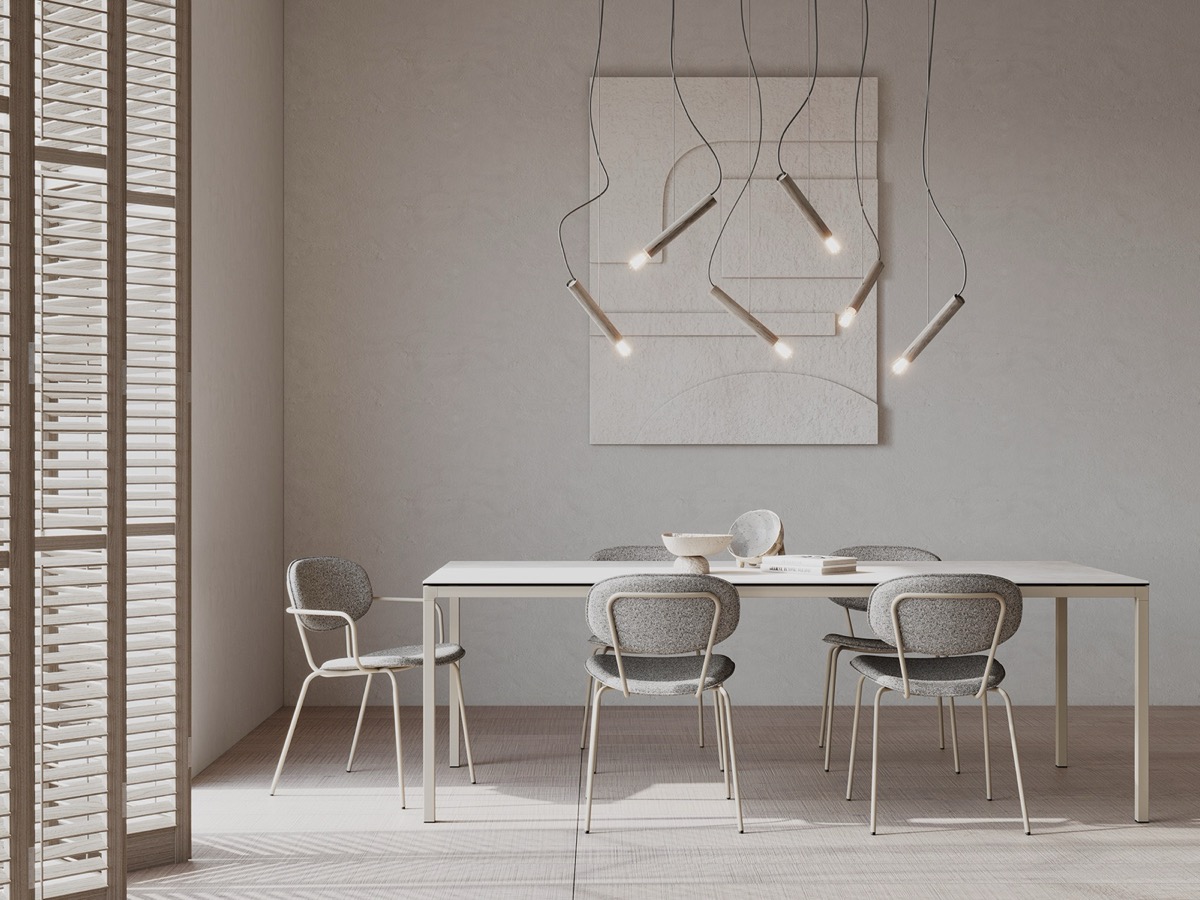
The marble problem
Every restaurant operator in Singapore discovers this eventually: marble tables are a terrible idea for high-volume F&B.
They look spectacular on opening night. By month three, ring stains. By month six, acid etching from lemon juice. By year one, a patina of damage that no amount of sealing can fix. Marble is limestone. Porous, soft, and chemically reactive. Beautiful, historic, and deeply unsuited to a surface that encounters coffee, wine, citrus, and cleaning chemicals hundreds of times a day.
Yet marble persists because the aesthetic is irresistible. The veining, the depth, that visual richness that signals quality. The problem isn't what marble looks like. It's what it fails to do in a commercial environment.
Ceramic isn't a compromise or a "marble-look alternative." It's a material that delivers everything designers love about natural stone while being engineered to handle everything a busy Singapore restaurant throws at it.
What "ceramic" actually means
We're not talking about earthenware. Ceramic tabletops are porcelain stoneware. Pressed under 5,000 tonnes of hydraulic pressure and fired at 1,200°C. At that temperature, the materials fuse into a glass-like, non-porous structure that's essentially impervious to liquids, stains, and chemicals.
The numbers that matter:
- Mohs 6+ hardness. Marble is 3–4. A steel knife is 5.5. Ceramic doesn't scratch from cutlery.
- 280°C heat resistance. Hot pans directly on the surface. No damage.
- 0.05% porosity. Effectively non-porous. Wine, soy sauce, curry. Nothing penetrates. No sealing required. Ever.
- Chemical resistance. Commercial cleaners, lemon juice, bleach. All fine. Marble etches from any acid.
- UV stable. Won't fade outdoors in Singapore's sun. The pigments are baked in at 1,200°C.

The honest comparison
Marble. Unmatched visual warmth. Also porous, soft, chemically reactive, and expensive to maintain. Beautiful but impractical for high-volume restaurants.
Granite. Harder than marble, but still porous, heavy, and aesthetically limited. Practical without the design flexibility.
Solid wood. Singapore's humidity is wood's worst enemy. Warping, cracking, seasonal movement, even in air-conditioned spaces. Romantic but high-maintenance.
Compact laminate. The commercial workhorse. Durable, affordable. We it looks and feels like laminate. Edge banding peels in humidity.
Ceramic. Non-porous, scratch-resistant, heat-resistant, UV-stable, reproduces any stone aesthetic, lighter than natural stone, zero maintenance. The best all-round material for commercial dining tables in Singapore.
Mobliberica: 45 years of ceramic engineering
Mobliberica has been engineering ceramic, glass, and solid-surface tabletops from their factory in Crevillent, Alicante since the 1970s. The specification depth is staggering:
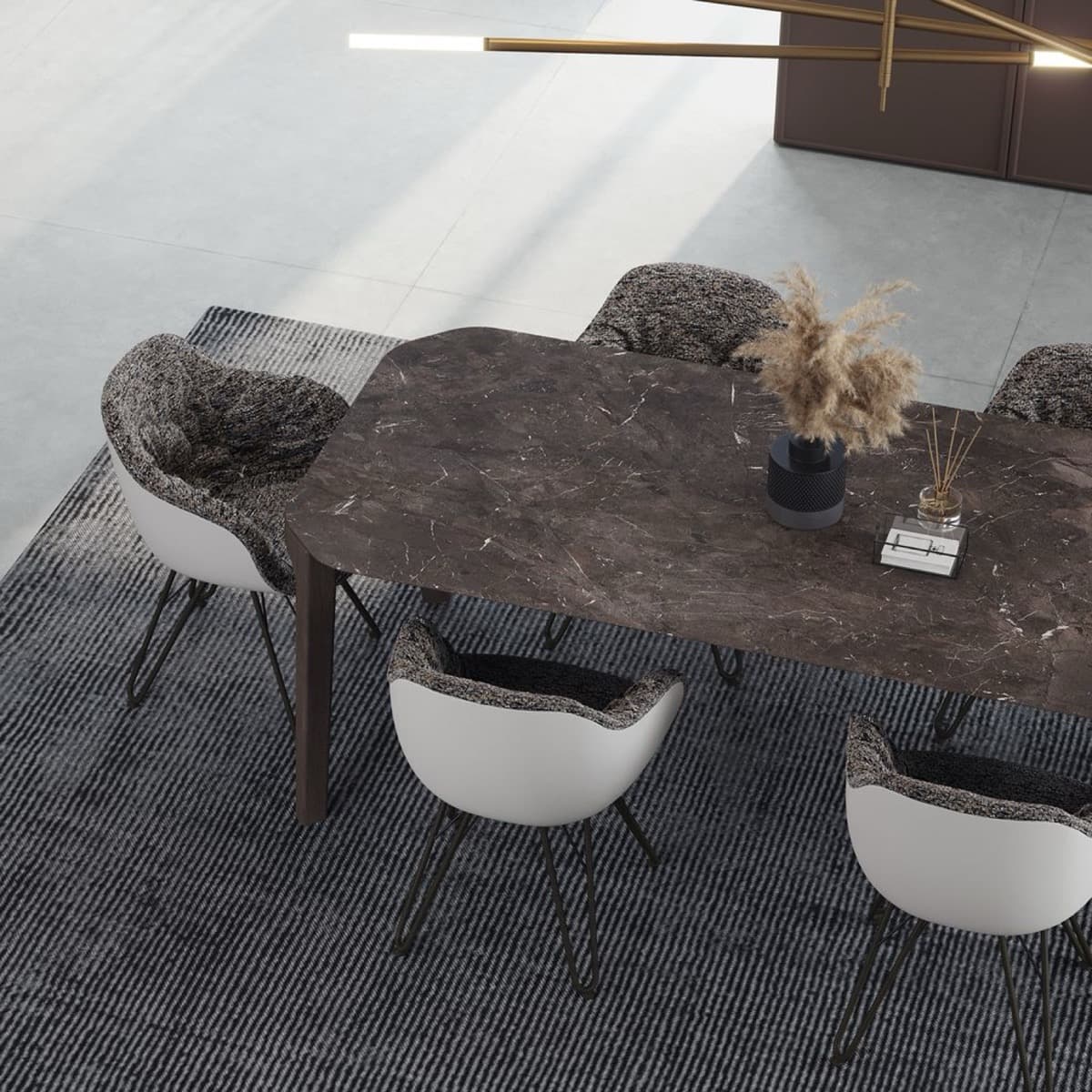
- 46 surface finishes. Calacatta marble reproductions, dark industrial concrete, warm stone textures, bold solid colours.
- 32 frame colours. Matte black to bronze to custom RAL.
- 280 fabric options for chairs and seating.
- Multiple configurations. Fixed, extendable, counter-height, bar-height, custom dimensions.
Everything comes from a single vertically integrated factory. One roof means consistent quality, faster custom orders, and uniformity across large hospitality projects requiring hundreds of identical tables.

What operators actually say
The feedback is always the same: dramatically reduced maintenance versus natural stone. No sealing, no polishing, no refinishing. Guests consistently perceive ceramic as real marble. We the "actually, it's ceramic" conversation becomes a positive talking point. After 3–5 years of high-volume use, ceramic tables look identical to installation day.
Dressy: ceramic beyond dining
Dressy is Mobliberica's sister brand, produced in the same Crevillent factory but focused on premium living and lounge furniture. Coffee tables, sideboards, consoles. Many featuring the same ceramic surfaces that make Mobliberica's dining tables exceptional.
For projects spanning dining and living spaces. A boutique hotel, a luxury residence. Specifying ceramic consistently across Mobliberica dining furniture and Dressy lounge pieces creates material coherence throughout.
Specifying ceramic for Singapore F&B
Define your operation. Cuisine type matters. Asian cuisines with soy sauce, vinegar, and turmeric are particularly demanding on porous surfaces, but pose zero challenge to ceramic. Hot pot and BBQ concepts require heat resistance only ceramic provides.

Choose your finish. Marble reproductions for classic positioning. Concrete effects for industrial-chic. Dark stone for moody evening restaurants. Solid colours for a clean modern base.
Configure the base. 32 frame colours. Standard dining height (750mm), counter (900mm), or bar (1050mm). Matte black works with everything; bronze adds warmth; custom RAL for brand matching.
Sample in situ. We keep ceramic samples in Singapore. Always evaluate under your actual lighting. Screens lie about colour.
Lead times. Production and shipping timelines vary by manufacturer. Contact us for current estimates. We consolidate with other Oriva Studio brands to optimise costs.
The total cost of ownership
Ceramic's upfront price is higher than laminate. But run the numbers over time:
Year 1: Everything looks good. Ceramic costs more per unit.
Year 3: Marble needs resealing (SGD 30–50/table annually) and has permanent stains. Wood's been refinished once (SGD 80–120/table). Laminate edges are lifting. Ceramic: unchanged. Zero maintenance cost.
Year 5: 20% of marble tables need replacement. Wood on its second refinishing plus 30% replacement. Laminate showing significant wear. Ceramic: identical to Year 1.
Year 7–10: Marble and wood have been through multiple maintenance cycles and partial replacements. Laminate fully replaced at least once. Ceramic from Year 1 still in service.
For a restaurant with 20 tables over 10 years, the lifecycle saving is SGD 20,000–40,000 in favour of ceramic. The higher upfront cost pays for itself within 2–3 years.
Get started
See the materials. Come touch the 46 finishes from Mobliberica. Compare them with your current tables.
Get a project quote. Number of tables, sizes, indoor or outdoor, design direction. We'll put together a spec.
For more on specifying for commercial environments, see our contract furniture guide and browse our full contract furniture range.
WhatsApp us at +65 8952 9692 for a quick conversation about your project.