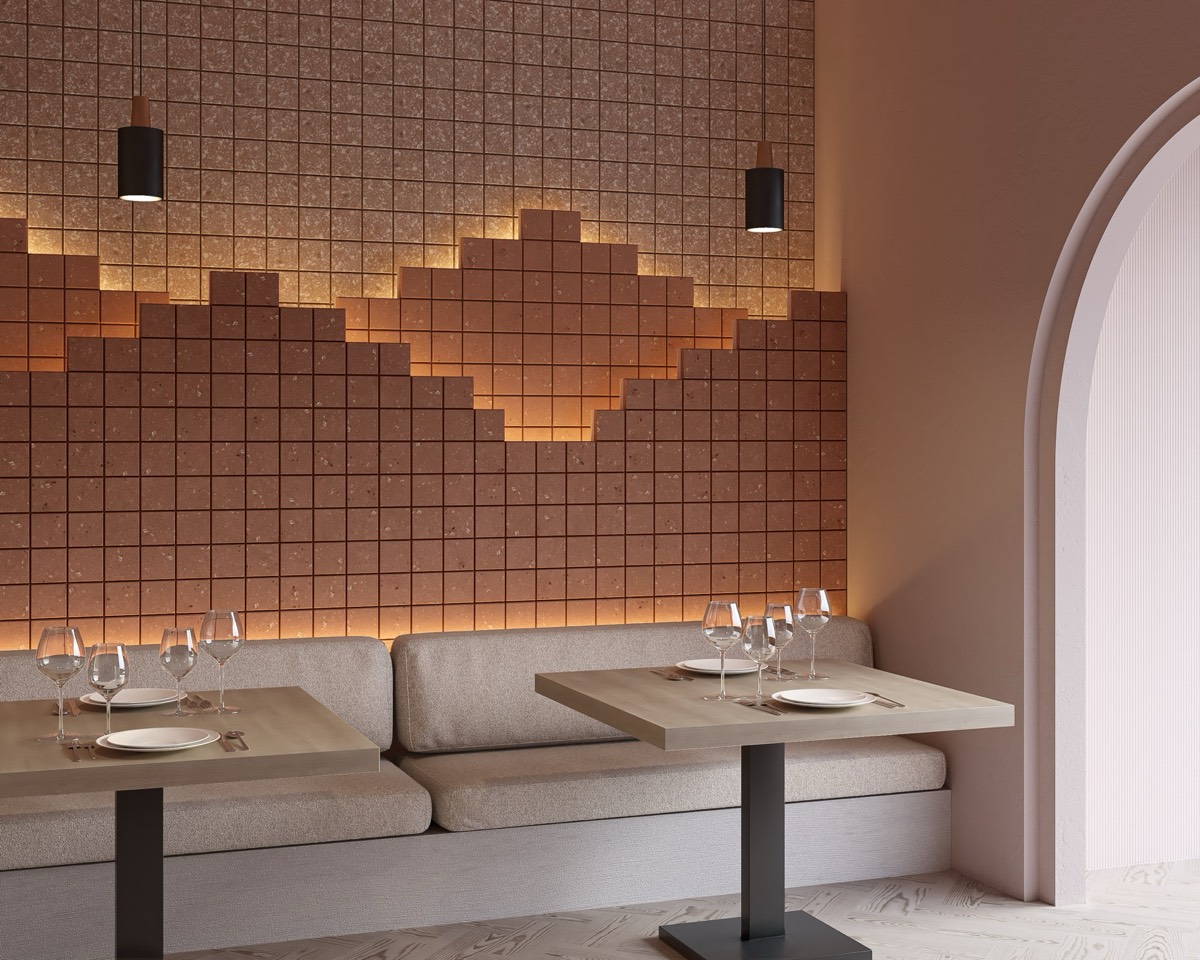
Why acoustics matter more than you think
Walk into any busy restaurant in Singapore and try to have a conversation. If you're leaning in, repeating yourself, straining to hear. You're experiencing an acoustic design failure.
Acoustics is one of the most overlooked aspects of interior design here. Designers obsess over lighting, materials, spatial flow. All rightfully so. But sound is treated as an afterthought. The result is spaces that look stunning in photos and feel exhausting to actually spend time in.
The data backs it up. Cornell University found excessive restaurant noise reduces customer satisfaction by 25%. In open-plan offices, noise is the number one complaint, cutting productivity by 15-30%.
The Singapore problem
Singapore's commercial interiors are acoustically hostile by default.
Hard surfaces everywhere. Polished concrete, glass partitions, ceramic tiles, marble countertops. All reflecting sound instead of absorbing it.
Open-plan everything. Hawker-inspired food halls, co-working spaces, hotel lobbies doubling as bars. Great for visual flow. Terrible for acoustics.
Compact footprints. Less distance between sound sources means more noise per square metre.
High ceilings. Industrial-chic with exposed ceilings and ductwork looks great. Sounds awful.
The basics. Without the lecture
You don't need to become an acoustician. But a few concepts help:
NRC (Noise Reduction Coefficient): 0 = perfectly reflective, 1.0 = perfectly absorptive. Panels with NRC 0.60+ provide meaningful improvement in restaurants and hospitality.
Absorption Class: A (most absorptive) to E (least). Class C. Where Creavalo sits at αw 0.60. Is the sweet spot for hospitality. Effective absorption with full design flexibility.
RT60 (Reverberation Time): How long sound takes to decay by 60dB. Target: 0.6-0.8s for restaurants, 0.5-0.7s for offices, 0.8-1.2s for hotel lobbies.
Rule of thumb: Cover 15-25% of wall and ceiling area in restaurants. 20-30% in open-plan offices. Your acoustic consultant can dial this in precisely.
Types of acoustic treatment
Fabric-wrapped panels
The traditional workhorse. Fibreglass or mineral wool core, acoustic-transparent fabric wrap. High NRC (0.80–0.95), cost-effective for large areas, but can look institutional if not carefully specified.
Recycled textile panels. Where it gets interesting
This is where acoustics stop being a compromise and start being a feature.
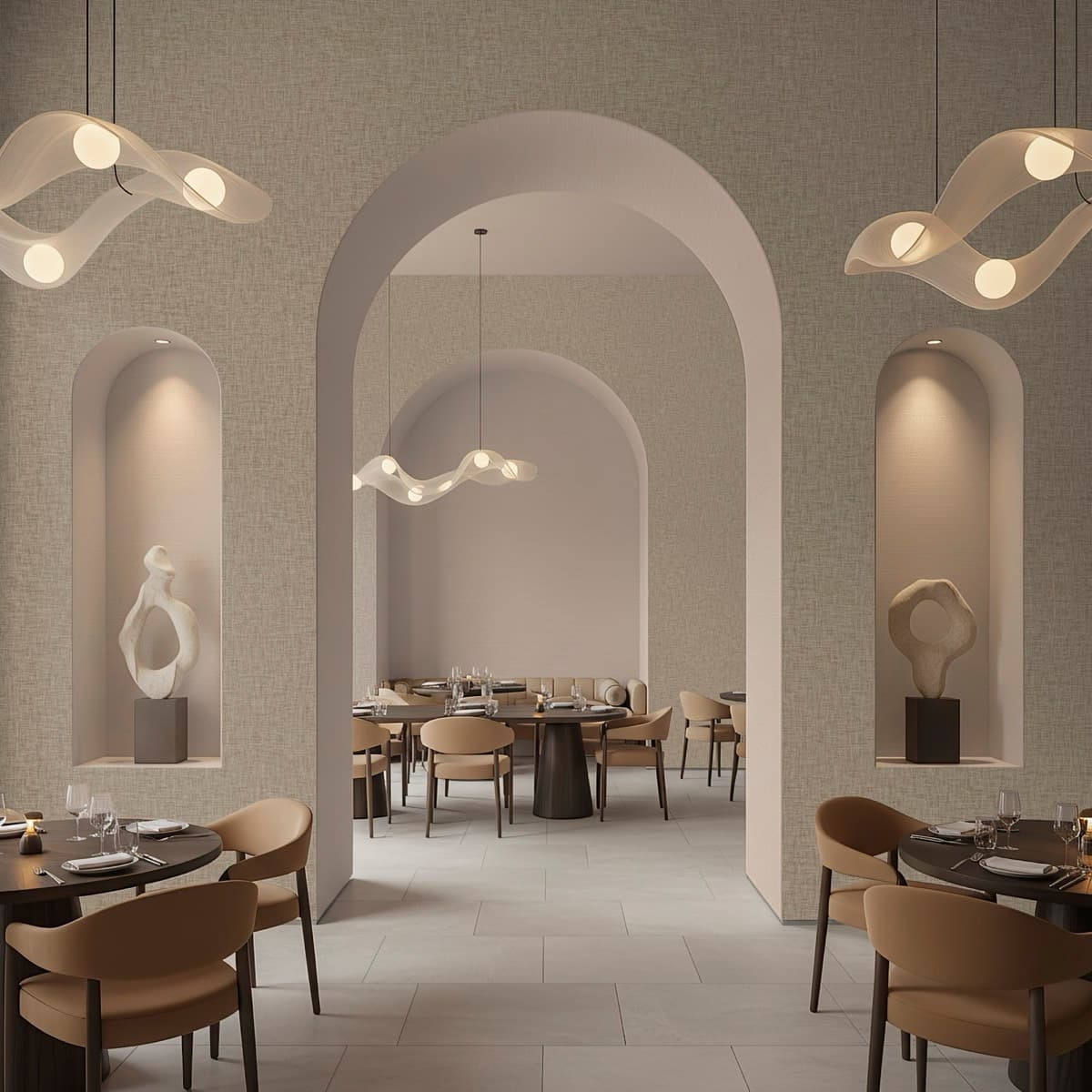
Creavalo makes acoustic art, not acoustic panels. Handmade in Valencia from recycled textiles. Manhattan panels also incorporate recycled cork, while Lienzo panels are 95% textile. Each piece has natural texture variations from the reclaimed materials. The imperfections give every installation its own character. They deliver Class C absorption (αw 0.60, NRC 0.65) plus fire resistance and thermal insulation, while looking like something you'd commission from an artist.
What sets them apart: fully custom murals. Submit any image, pattern, or graphic. Creavalo reproduces it on the acoustic surface. A wall installation that doubles as large-scale art and functional treatment. Every square metre recovers 7.6kg of material from landfill.
Wood slat panels
Timber slats over acoustic felt backing. Warm, natural aesthetic. Effective for mid-to-high frequencies. But the timber needs careful specification for Singapore's humidity. We honestly, these have become a design cliché at this point.
Acoustic plaster
Invisible treatment sprayed or trowelled directly onto ceilings. Ideal when visible panels would compromise the concept. Specialist installation, limited colour range, expensive to repair.
Creavalo: when acoustics become art
Creavalo has completely rethought what acoustic treatment can be. The fashion industry generates 92 million tonnes of textile waste annually. Most of it ends up in landfill. Creavalo intercepts that waste and turns it into acoustic art.
Every panel starts as textile waste: discarded clothing, factory offcuts, material destined for landfill. In their Valencia workshop, these textiles are sorted, shredded, and formed into dense panels. Manhattan adds recycled cork (45/45/10 textile-cork-binder ratio). Lienzo is almost pure textile (95/5 textile-binder). No two panels are exactly alike. That's not a limitation. It's the point.
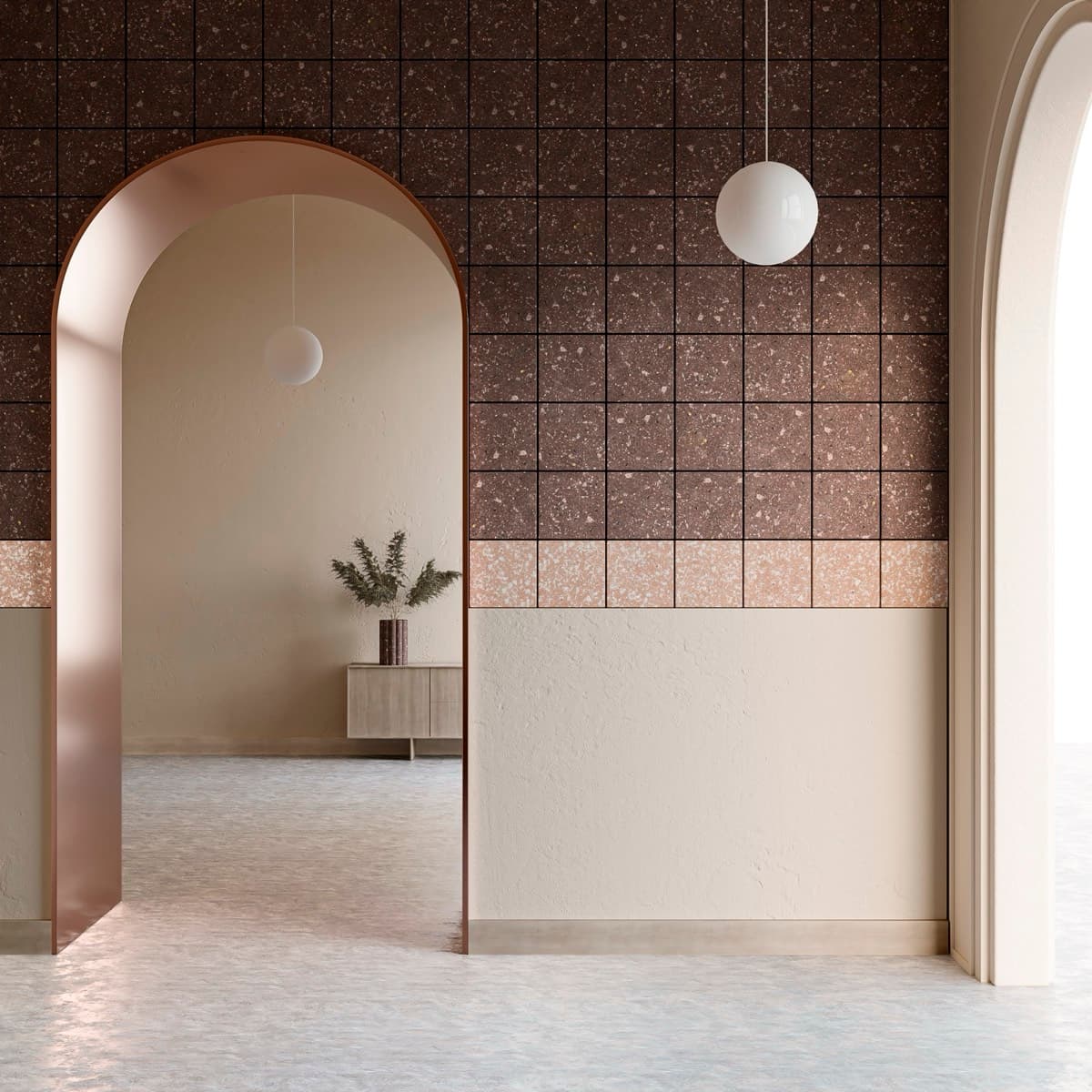
Manhattan
Sculptural 3D panels with clean geometric lines. Available in natural colours derived from the textile blend. They install as a modular wall system. Precise edges creating sophisticated relief patterns that play with light and shadow. For restaurants, hotel corridors, meeting rooms, retail.
Lienzo
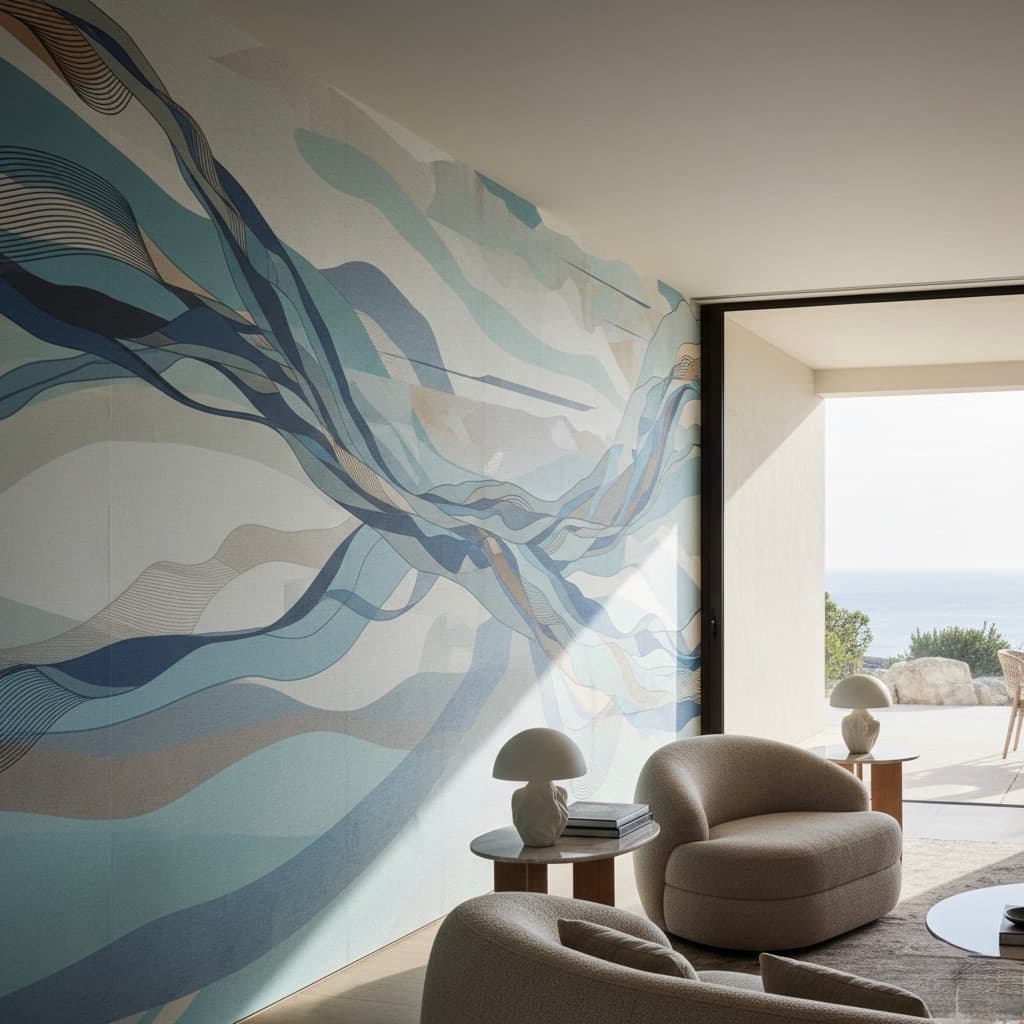
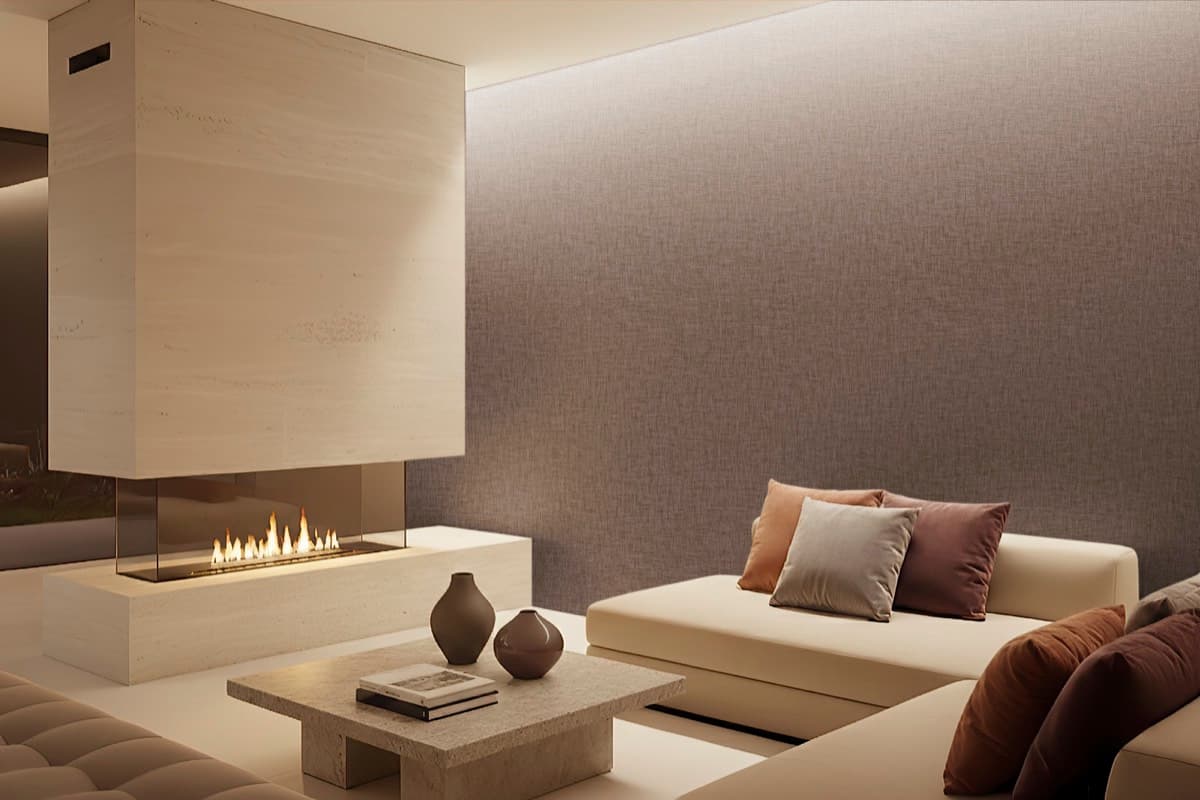
"Lienzo" means "canvas" in Spanish. Supplied in rolls, Lienzo can cover entire walls seamlessly. Designers submit artwork at any scale, and Creavalo reproduces it as a functional acoustic mural using UV-stable printing. Like Manhattan, every square metre recovers 7.6kg of textile waste from landfill.
What designers are doing with it:
- Oversized photographic murals in hotel lobbies
- Brand storytelling walls in corporate headquarters
- Abstract art installations on restaurant feature walls
- Heritage imagery in cultural venues
Performance that's actually certified
- Acoustic: Class C, αw 0.60, NRC 0.65 (Polytechnic University of Valencia)
- Fire safety: B-s2,d0 per EN 13501-1:2018 (AITEX certified). Meets Singapore SCDF requirements
- Thermal insulation: Additional thermal performance from the dense recycled textile composition
- Sustainability: 7.6kg recovered per m²
- Dimensions: Up to 2400mm × 1200mm; custom sizes available
- Weight: ~4kg/m²
- Installation: Adhesive or mechanical fixing
Where it works
Restaurants & bars
The primary use case in Singapore. Hard surfaces, open kitchens, lively atmosphere. All creating acoustic problems best addressed early in the design process. Creavalo Lienzo custom murals on feature walls, combined with ceiling treatment. Target 20-25% coverage.
Hotel lobbies
Multiple functions. Arrival, meetings, bar, lounge with different acoustic needs across zones. Manhattan panels in corridors and meeting areas. Lienzo murals as dramatic lobby focal points.
Offices & co-working
Acoustic treatment directly impacts productivity. Creavalo panels double as branding elements. Company imagery, values, or wayfinding printed onto acoustic surfaces. Functional and on-brand.
Getting started
If you're working on a project where acoustics matter. We in Singapore, they almost always do. We can help.
Request a consultation. We'll review your plans, discuss targets, and recommend treatment tailored to your concept and budget.
See the materials. We have Creavalo samples in Singapore. The texture and quality need to be experienced in person.
Custom design development. For Lienzo murals, we work with you from initial concept through final artwork preparation.
Whether it's a 50-seat restaurant or a 10,000 sqft office, good acoustics make a real difference.
Browse our acoustic treatment page for a full overview, or read our contract furniture guide for more on specifying for commercial spaces in Singapore.